Showing posts with label Military history. Show all posts

Sunday, December 29, 2013

Tanking of you this holiday season

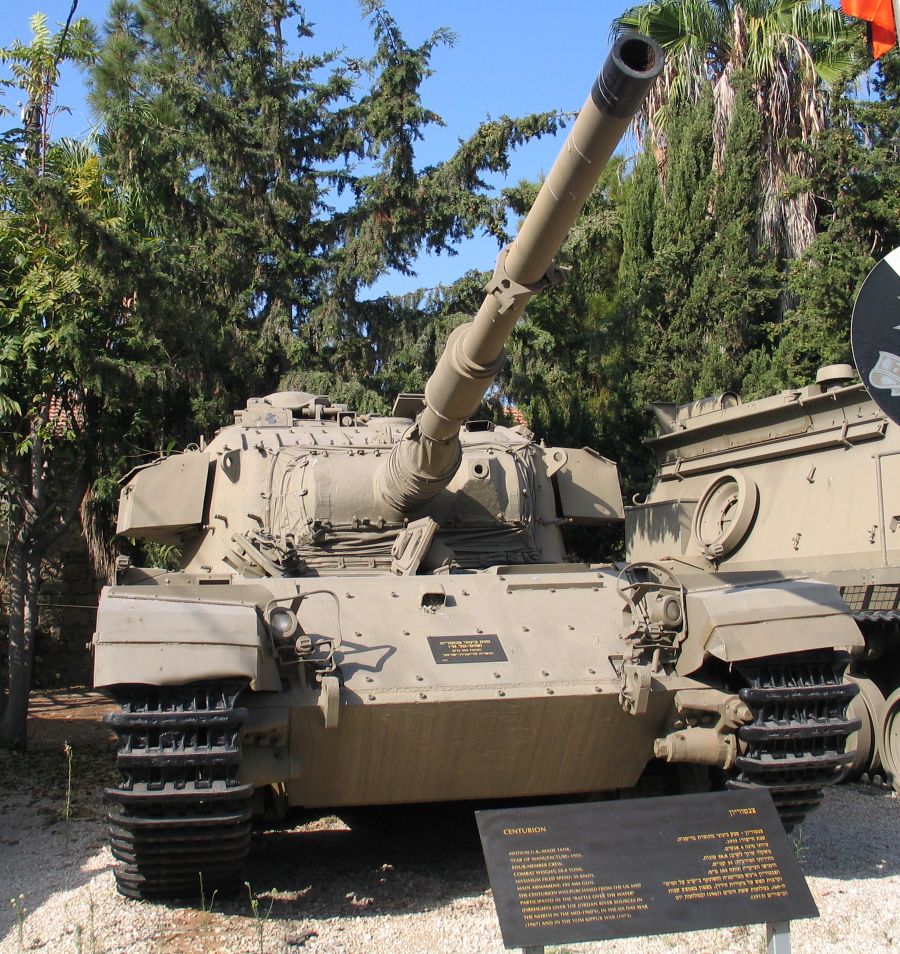
Centuuuuuuuuuuuuuuuuuuuuuuuurioooooooooooooooooooooon!

(via Wikipedia)
Ceeeeeeeeeeeeeeeeeeeeeeeeeeeeeeeeeeeeeeeeeeeeeeeeeeeeeen

(via Wikimedia)
tuuuuuuuuuuuuuuuuuuuuuuuuuuuuuuuuuuuuuuuuuuuuuuuuuuuuuuuuuuuuur

(via Wikimedia)
iiiiiiiiiiiiiiiiiiiiiiiiiiiiiiooooooooooooooooooooooooooooooooooooooooooooon!

(via Wikimedia)

Wednesday, August 21, 2013

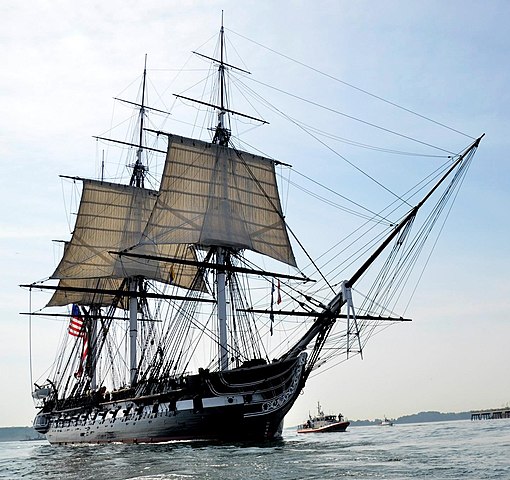
Check out this picture of the USS Constitution's original sail plan

Via Wikipedia.
So, Monday marked the 201st anniversary of the USS Constitution's (Old Ironsides) victory over the HMS Guerriere during the War of 1812. Indeed, it was during this battle that the ship earned her famous nicknamed of 'Old Ironsides' due to her hull withstanding the cannon shots of the Guerriere. Apparently, this was due to American oak trees being more dense than those grown in Europe. So, to mark this occasion, here's the original sail plan for the Constitution.

Credit: National Archives.
Probably my favorite thing about the Constitution is that 215 years after she entered service, the ship is still a commission warship today. Only the HMS Victory beats it and that's the only time a British warship has bested her.

h/t Popular Science.

Wednesday, January 30, 2013

I guess you could say that my reading lately has been pretty Sharpe


Wow that was bad. It wasn't punny at all.

Okay, I'll stop now.

As you might be able to guess from the title, I've started reading Bernard Cornwell's excellent Richard Sharpe series of novels, beginning with Sharpe's Tiger.
bookfever.com.

I'm on the 43rd page, but damn it is good. Here's the gist:
In a battery of events that will make a hero out of an illiterate private, a young Richard Sharpe poses as the enemy to bring down a ruthless Indian dictator backed by fearsome French troops.

The year is 1799, and Richard Sharpe is just beginning his military career. An inexperienced young private in His Majesty's service, Sharpe becomes part of an expedition to India to push the ruthless Tippoo of Mysore from his throne and drive out his French allies. To penetrate the Tippoo's city and make contact with a Scottish spy being held prisoner there, Sharpe has to pose as a deserter. Success will make him a sergeant, but failure will turn him over to the Tippoo's brutal executioners — or, worse — his man-eating tigers. Picking his way through an exotic and alien world. Sharpe realizes that one slip will mean disaster. And when the furious British assault on the city finally begins, Sharpe must take up arms against his true comrades to preserve his false identity, risking death at their hands in order to avoid detection and thus to foil the Tippoo's well-set trap.

Monday, January 14, 2013

That one time everbody thought ships ramming other ships was a great idea

And I'm not talking about the ancient world, either. No, in the mid-19th century navies of the world went gaga with the idea of attaching rams to their new iron-hulled, steam-powered warships. Largely this was because of the CSS Virginia and the Battle of Hampton Roads, where the ironclad successfully sank the USS Cumberland after ramming her. This idea was further reinforced after the Battle of Lissa, which had so much ramming, you'd think it was a gay porn shoot.

CSS Virginia ramming the USS Cumberland.
Credit: Wikipedia.
The single biggest reason for the reintroduction of ramming, however, was technology. Armor had outpaced gunnery and as a result, ship mounted cannons of the day couldn't penetrate the hulls of ironclads. So combine the three and everybody went "Well clearly ramming the hell out of the other guy is the way to go!" and so you have countries building battleships and cruisers with those things. Ironically, these rams were effective...at sinking friendly ships whenever one accidentally collided with another.

There was even a variation: the torpedo ram. These ships combined rams with torpedoes - first as a combined weapon and later as two separate entities - because once people get attached to an idea, they're going to ride it all the way home, no matter how ill-thought out it is.

Fortunately, naval gunnery eventually caught up and the idea of ships ramming other ships quietly faded away. Mostly. Torpedo rams were immortalized by H.G. Wells in War of the Worlds when the HMS Thunderchild, a torpedo ram battled and destroyed two Martian walkers.

Gotta love mid-to-late 19th century naval warfare and its awkward, puberty like growth.

Wednesday, November 21, 2012

Awesome video: USS Monitor vs. CSS Virginia

So apparently back in like 1991, a TV movie came out that focused on the first battle between ironclad warships called Ironclads. The battle scene itself is quite good.


This is my favorite era of naval warfare, the transition from wind-powered, wooden hulled warships to steam-powered, metal hulled warships. I should do some posts about that.

Thursday, April 26, 2012

Twenty WWII spitfire fighters discovered in Burma

Holy moly guacamole, this is awesome!

A British farmer spent 15 years and a metric buttload of money to look for the stalwart planes and finally managed to locate them in an underground bunker in Burma. Apparently, the British buried them there near the end of the war both because they were obsolete and to prevent them from falling into the hands of the Japanese. Another thing that's interesting is that the planes were never taken out of the crates they were shipped over in.
...Of course, enthusiasts of WW2 “Warbirds,” military history buffs and action figure collectors are all equally excited about this stunning discovery, especially after learning that yes, the buried planes were still INSIDE their shipping crates, tarred, lubed and sealed up tight.
This find is pretty important because the number of working Spitfires in the world is only 35, so these twenty will go a long way towards ensuring their survival. Spitfires are an important part of not just British history, but world history. These are the planes that helped defend England during the Blitz and fought the forces of Fascism in Europe and Asia. Plus, they're just pretty to look at. Pre-jet engine military aircraft have an elegance and beauty that their successors their lack.

h/t to The Joe Report and The Lair of the Evil DM.

Tuesday, March 13, 2012

Did you know shrapnel came from a guy named Henry Shrapnel?

Because I didn't until just now. Henry Shrapnel was an officer in the British Army that invented a new type of exploding cannon shell back in 1780s. Nasty weapon, actually - it was designed to explode overhead of an enemy army and rain metal down on them. Thus, the word shrapnel was born. I always thought it was one of those loanwords from a foreign language that was just assimilated into the English vocabulary. Learn something new everyday.

Monday, June 13, 2011

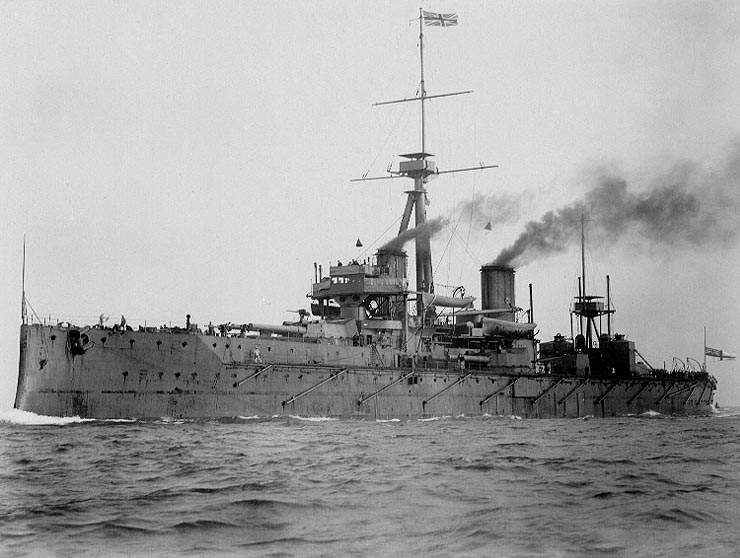
HMS Dreadnought, the ship that literally changed the game

Credit: Wikipedia.
The HMS Dreadnought, lead ship of not only the Dreadnought class, but dreadnoughts themselves. Dreadnoughts were a beast of a ship - larger, heavier and better armed and armored than other ships of the time. In fact, the Dreadnought rendered every battleship of the era obsolete by its mere existence, they became known as pre-dreadnoughts. Launched in 1906, she was probably the most feared ship on the planet, yet never saw serious combat. No joke, the only ship the Dreadnought ever sank was an unfortunate German submarine that it rammed.

The Flying Squadron of the Spanish-American War

Credit: Murat Halstead/Wikipedia.
The Flying Squadron was the name given to a group of U.S. Navy warships that fought the Spanish fleet around Cuba during the Spanish-American War and operated in the Gulf, Atlantic and Indies. The squadron consisted of two battleships (Texas and Massachusetts), two protected cruisers (Minneapolis and Columbia, an armored cruiser (Brooklyn) and several other ships. The Squadron was commanded by Commodore Winfield Schley.

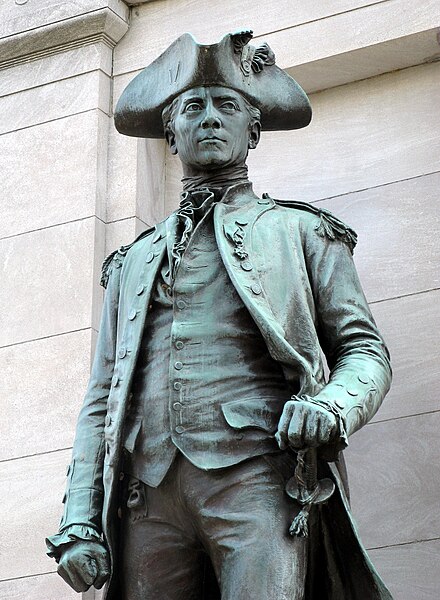
John Paul Jones and his return home

Credit: Wikipedia.
John Paul Jones was a famous naval officer who commanded the fledgling Continental Navy during the American Revolution and is regarded as the Father of the United States Navy. Jones is an interesting man and ballsy as all hell. During the war, he lead raids not only against English shipping, but two raids of British Isles themselves - first at Whitehaven, where he planned to burn all the ships in the harbor and anything else he could, followed by a raid against an Earl's estate on St. Mary's Isle, where he planned to kidnap and hold the Earl for ransom! Like I said, this guy was ballsy. He also participated in an attempted invasion of England by a combined Spanish and French force in 1779 and with several French ships under his nominal command, attempted to create a diversion to lure the Royal Navy's Channel Fleet away. The invasion failed, but in the subsequent battle between his ship, the Bon Homme Richard and the HMS Serapis, the legend of his famously proclaiming "I have not yet begun to fight!" was created. There is some doubt as to his saying that, but he did say "I may sink, but I'll be damned if I strike" in response to the captain of the Serapis asking for his surrender.

Did I mention that at the time, Jone's ship was sinking? And just to top it off, he won that battle and took the Serapis as his own. After the war, he decided to stay in Europe, first living in Paris, then moving to Russia and taking a job in their navy. He eventually left after political backstabbing a smear campaign directed against him by jealous Russian officers and returned to Paris, where he died on July 18, 1792. He was buried at St. Louis Cemetary, which belonged to the Royal Family of France. Unfortunately, the French Revolution hit not long after, the Revolutionary government that took over sold the land and I guess in the chaos, the everybody forgot "oh hey, there are bodies buried here, somebody might want to note that."